
Introduction

What is quantum computing?
Quantum computing is a type of computing that uses the rules of quantum physics, which study very small particles. Instead of using regular bits (which are either 0 or 1), quantum computers use qubits. Qubits can be in many states at once, thanks to special properties like superposition and entanglement. This helps quantum computers solve some problems much faster than regular computers.
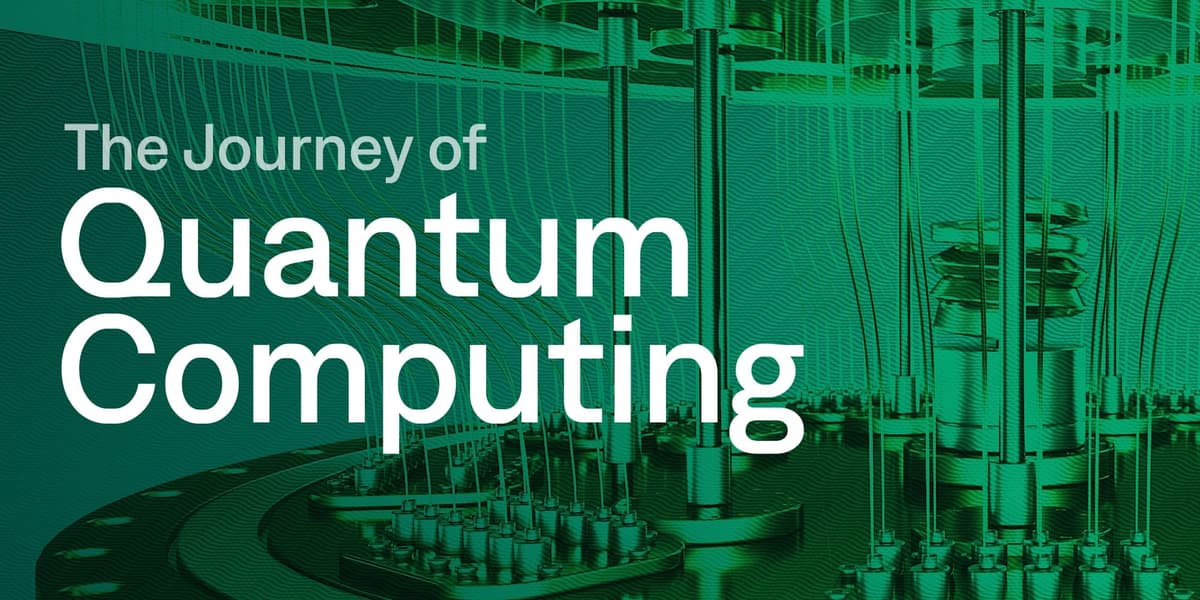
Journey of Quantam Computing
Quantum computing has evolved from a theoretical concept to an emerging technology that could transform industries like cryptography, artificial intelligence, and drug discovery. Below is a detailed timeline of the key milestones in the development of quantum computing:
1980–1990: Laying the Foundations of Quantum Computing

- 1981: Richard Feynman proposes the idea of using quantum mechanics for computation. He suggests that quantum computers could simulate physical systems too complex for classical computers.
- 1985: David Deutsch expands Feynman’s idea, introducing the concept of a universal quantum computer, capable of solving any problem that classical computers can.
- 1989: IBM and Stanford University begin exploring quantum computing experiments, setting the stage for future breakthroughs.
1990–2000: Quantum Algorithms and Early Experiments
- 1994: Peter Shor develops Shor’s algorithm, which shows that quantum computers could factor large numbers exponentially faster than classical computers. This breakthrough has huge implications for cryptography.
- 1996: Lov Grover creates Grover’s algorithm, allowing quantum computers to search unsorted databases more efficiently than classical algorithms.
- 1998: The first demonstration of quantum algorithms occurs, marking the first step toward practical quantum computing.
- 1999: D-Wave Systems, a quantum computing company, is founded, focusing on quantum annealing.
2000–2010: Early Quantum Hardware and Proofs of Concept
- 2001: IBM and Stanford University demonstrate a 5-qubit quantum computer, solving simple problems.
- 2007: IonQ and other companies make progress with small-scale quantum computers, based on trapped ion technology.
- 2009: The first quantum computing cloud service is launched, allowing remote access to quantum computers for research.
- 2010: Research on quantum error correction starts to gain momentum, aiming to fix issues that arise in quantum computations.
2010–2020: Advancements in Quantum Hardware and Quantum Supremacy
- 2011: IBM introduces Quantum Experience, a cloud-based platform that lets users run quantum programs on an actual quantum computer.
- 2014: Google and NASA make significant strides, using quantum computing to solve complex problems in optimization and machine learning.
- 2017: IBM releases a 20-qubit quantum computer and offers it on the cloud for real-world applications.
- 2019: Google claims quantum supremacy with its 53-qubit Sycamore processor, solving a problem in 200 seconds that would take classical supercomputers thousands of years.
- 2019: IBM, Microsoft, and Honeywell also make significant advancements, creating quantum platforms for researchers and businesses.
2020–Present: Scaling Quantum Computers and Real-World Applications
- 2020: Quantum computing continues to progress, with major tech companies like IBM, Microsoft, and Google making their quantum computers more accessible via cloud platforms.
- IBM launches Qiskit Runtime, a faster and more efficient quantum computing platform.
- Microsoft advances its quantum programming language Q# and develops topological qubits for stability.
- 2021: IBM announces plans to build a 1,000-qubit quantum computer by 2023, a major step toward making quantum computing scalable.
- 2022: Intel, Google, and Rigetti release more powerful quantum processors with higher qubit counts.
- 2023: Researchers focus on quantum error correction and quantum software development, with practical applications in cryptography, finance, and materials science becoming more viable.
- 2024: Companies like IBM, Google, Microsoft, and Honeywell continue to develop quantum hardware and offer cloud-based quantum services, signaling the future of quantum computing
The State of Quantum Computing in 2025: What’s Happening?
Quantum computing is changing fast, and by 2025, it will be more powerful and useful. Here's what you can expect from quantum computing in the near future.
1. Bigger and Better Quantum Computers
- More Powerful Computers: By 2025, quantum computers will have more than 1,000 qubits (the basic unit of quantum computers). Big companies like IBM, Google, and Intel are building these stronger computers. IBM plans to have a 1,000-qubit processor called Condor.
- More Stable Computers: Quantum computers will be more stable, meaning they will work better without errors. This will make them faster and more reliable.
2. Fixing Errors in Quantum Computers
- Error Fixing: One big challenge with quantum computers is that they make mistakes easily. But by 2025, there will be better ways to fix errors in real-time, making quantum computers more reliable.
- Better Performance: Researchers are working on ways to make sure quantum computers can keep running without stopping for repairs. This will be a key step in making them more useful.
3. Software and Programs for Quantum Computers
- Real-World Uses: Quantum computers will start solving real problems, like helping in pharmaceutical research, materials science, and logistics. Companies will use them to find better solutions to complex problems.
- Combining Quantum and Regular Computers: For now, quantum computers will work alongside regular computers, using both to get the best results. This is called a hybrid system, and it will be common by 2025.
- Easier to Program: Tools like IBM’s Qiskit and Microsoft’s Q# will make it easier to create programs for quantum computers.
4. Quantum Computing in the Cloud
- Accessing Quantum Computers Online: By 2025, you’ll be able to use quantum computers through the cloud (the internet). Companies like IBM and Microsoft already offer cloud services where anyone can run quantum algorithms without owning expensive hardware.
- More People Can Use It: Cloud services will make it easier for schools, small businesses, and researchers to experiment with quantum computing, even if they don’t own a quantum computer.
5. How Quantum Computing Will Be Used
- Safer Online Security: Quantum computers will soon be able to break current security codes. So, by 2025, new quantum-resistant security methods will be developed to protect data from quantum computers.
- Optimizing Systems: Quantum computers will help improve logistics and supply chain management by solving problems faster than traditional computers.
- Improving Medicine and Materials: Quantum computers will be used to discover new drugs and design new materials by simulating molecules in ways that regular computers can’t.
- Boosting AI: Quantum computers will make artificial intelligence (AI) better, helping computers understand and solve problems faster.
6. Challenges for Quantum Computing in 2025
- Building Bigger Computers: While we’ll see larger quantum computers, they’re still not perfect. There are challenges in making them even bigger and better.
- Keeping Quantum Computers Stable: Quantum computers are very sensitive, and they lose their information easily. Researchers will work hard to make them more stable, but it will still be a challenge in 2025.
- High Costs: Quantum computers are expensive to build and maintain. Although cloud services will make them more accessible, they will still be costly to use.
7. What’s Next for Quantum Computing?
- More Collaborations: By 2025, many companies, governments, and universities will work together to improve quantum computing. Governments will also invest more in quantum research to stay competitive.
- New Quantum Technologies: New uses for quantum technology will emerge, such as quantum sensors, quantum communication, and quantum networks, which will be important for things like secure communication and precise measurements.
By 2025, quantum computing will be more powerful and ready to solve real-world problems. It will help in areas like cryptography, optimization, medicine, and AI. While large-scale quantum computers won’t be everywhere yet, the progress by 2025 will lay the groundwork for future breakthroughs. This technology will change how we solve problems and make decisions in the years to come.
what are the applications of Quantam Computing?
1. Security: Quantum computers can make data more secure by creating stronger encryption methods.
2. Medicine: They can help discover new drugs faster by simulating molecules and how they work.
3. Problem-solving: Quantum computers can help solve complex problems in areas like transportation and business to make things more efficient.
4. Artificial Intelligence: They can make AI and machine learning smarter by processing lots of data quickly.
5. Climate Studies: Quantum computers can help scientists better understand and solve problems related to climate change.
5 essential and basic terms about Quantam Computing You must know
1. Qubit: The basic unit of information in quantum computers, like a bit in regular computers, but it can be both 0 and 1 at the same time.
2. Superposition: This means a qubit can be in many states at once, not just 0 or 1, which helps quantum computers process more information.
3. Entanglement: When qubits are linked together, so the state of one affects the state of the other, even if they are far apart.
4. Quantum Speedup: Quantum computers can solve certain problems faster than regular computers because of their special properties.
5. Quantum Algorithm: A set of instructions that helps quantum computers solve problems more efficiently than classical computers.
What are Quantam computers?
Quantum computers are a type of computer that use the principles of quantum physics to process information in a completely different way than regular computers. Instead of using regular bits (which are either 0 or 1), quantum computers use qubits.
Qubits are special because they can be both 0 and 1 at the same time, thanks to properties like superposition. They can also be connected to each other in a way that changes the state of one qubit when another qubit is changed, through entanglement.
This allows quantum computers to perform certain tasks much faster and more efficiently than regular computers, especially for solving complex problems like simulating molecules or optimizing large systems. However, quantum computers are still in the early stages of development and are not yet widely available.
Is Quantam Computing in Rise?
Yes, quantum computing is on the rise. Researchers and companies are making significant progress in developing quantum computers. While they are still in the early stages, quantum computers are becoming more powerful and capable of solving complex problems that regular computers can't handle. Major tech companies like Google, IBM, and Microsoft, as well as startups, are investing heavily in quantum computing research. It has the potential to revolutionize areas like medicine, cryptography, artificial intelligence, and more. However, there are still challenges to overcome before quantum computers are widely available.

Top 7 Pros and Cons
Pros:
- Speed: Quantum computers can solve certain complex problems much faster than classical computers.
- Better Security: They can create stronger encryption methods, making data more secure.
- Drug Discovery: Quantum computers can simulate molecules, helping to develop new medicines faster.
- Optimization: They can solve complex problems in logistics, transportation, and business more efficiently.
- Advanced AI: Quantum computing can improve machine learning and artificial intelligence by processing large amounts of data quickly.
- Climate Research: Quantum computers can model complex climate systems to better understand and address climate change.
- New Discoveries: They can help solve problems that are currently unsolvable with classical computers, opening new areas of research.
Cons:
- High Costs: Quantum computers are expensive to build and maintain, making them out of reach for many.
- Fragility: Qubits are very delicate and can be easily disturbed by their environment, which makes them hard to work with.
- Technical Challenges: Quantum computers are still in the early stages, and many technical hurdles need to be overcome.
- Limited Availability: They are not yet widely available for practical use and require special conditions to operate.
- Security Risks: While they can improve security, quantum computers can also break current encryption methods, creating new risks.
- Resource Intensive: Quantum computing requires extreme conditions, like very low temperatures, which makes it energy-intensive.
- Lack of Software: There is still limited software and algorithms available for quantum computers, making them difficult to use for practical tasks.
what is the future of quantam computing?
The future of quantam computing is very promising, with the potential to revolutionize many industries. Here are some key points about its future:
Faster Problem Solving: Quantum computers will be able to solve complex problems that are impossible for classical computers, such as simulating molecules for drug discovery and finding better solutions for optimization problems.
Breakthroughs in Science and Medicine: Quantum computing could lead to new discoveries in physics, chemistry, and biology. It might help create new medicines, improve renewable energy technologies, and tackle climate change by modeling complex systems.
Improved AI: Quantum computing has the potential to enhance artificial intelligence by processing massive amounts of data much faster, leading to smarter, more accurate AI systems.
Better Security: While quantum computers can break current encryption methods, they could also lead to new, stronger ways to protect data, making cybersecurity much more advanced.
Wider Accessibility: As technology improves, quantum computers will become more accessible to researchers, businesses, and even cloud services, making it easier for industries to adopt and benefit from this technology.
Challenges to Overcome: There are still many challenges, such as building stable qubits, reducing error rates, and making quantum computers practical for everyday use. But ongoing research and investment are driving progress.
In the future, quantum computing will likely become a critical tool in areas like healthcare, finance, cybersecurity, and materials science, but it will take time before it’s widely used and integrated into daily life.
Conclusion
Quantum computing is a rapidly developing field with the potential to revolutionize industries by solving problems that classical computers can’t. While it’s still in the early stages, significant progress is being made in areas like quantum hardware, error correction, and quantum algorithms. By leveraging the power of quantum bits (qubits), quantum computers will be able to tackle complex tasks in areas such as cryptography, drug discovery, optimization, and AI.
Although large-scale quantum computers are not yet fully realized, the advances by 2025 will lay the groundwork for more practical and powerful systems in the future. As more companies, governments, and research institutions invest in quantum technology, it will continue to improve and impact fields like medicine, cybersecurity, and finance.
In conclusion, quantum computing holds immense promise, and while challenges remain, its future looks bright. It will likely transform industries, offering new ways to process information and solve problems that were once considered impossible.
Comments
Post a Comment